Stronger Than the Storm: A Designer's SVG Review
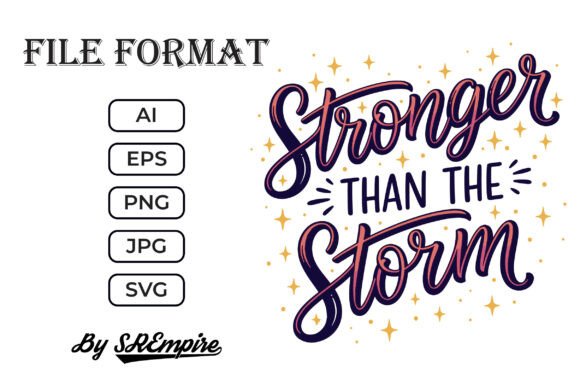
When you’re considering a new embroidery design for client work or your own product line, it’s not just about the visual. It’s about how that graphic will translate into stitches, how it will feel on fabric, and ultimately, how it will resonate with the person wearing or using it. The Stronger Than the Storm SVG Design landed on my screen for a review, and my first thought was its immediate thematic potency. This isn’t a generic motivational phrase; it’s a crafted statement of resilience.
The Visual Personality & Its Embodied Mood
The design’s concept—sailing through stormy seas—is conveyed with a clear, symbolic graphic style. It creates a mood of quiet strength rather than loud bravado. For embroidery, this is a significant advantage. The visual personality feels grounded and meaningful, which translates beautifully into a handmade product. When a customer sees this embroidered on a sweatshirt or bag, they aren’t just seeing a decoration; they’re encountering a sentiment. This intrinsic meaning elevates it from a simple crafts graphic to a piece with emotional weight, perfect for personalized gifts or boutique products that tell a story.
A Natural Fit for Real Projects
Let’s picture a real scenario: a client requests a custom embroidered tote bag as a gift for a friend navigating a tough time. This Stronger Than the Storm SVG Design is exactly what I’d consider. The layout, likely with a central illustrative element paired with text, promises good balance for a medium-sized embroidery area. The detail level, from what the description suggests, seems thoughtfully crafted—not overly dense, which is crucial for clean stitching on bag fabric. It naturally belongs on items meant for daily use and affirmation: tote bags, pillow covers, tea towels, and of course, apparel like sweatshirts and t-shirts.
Performance Across Embroidery Applications
In practical terms, this design’s strength lies in its versatility for small business merchandise and custom apparel. For an Etsy seller specializing in embroidered patches, it could be a standout listing. Stitched onto a dense, stable patch material, the satin stitch borders and fill stitch areas would hold crisp detail. On a baby blanket or nursery decor item, softened with pastel threads, it becomes a gentle mantra. For holiday gifts or wedding gifts aiming for longevity, embroidered onto a kitchen towel or apron, it offers both utility and meaning.
The design also has clear potential in commercial embroidery projects. A small shop wanting to brand its team caps with an inspiring motif could use this effectively, provided the hoop size accommodates the cap’s curved surface. In digital product previews and printable mockups for fellow designers, it serves as a robust design asset, conveying a complete thematic package.
Where Careful Application is Key
As with any embroidery file, there are applications where this design demands a bit more planning. If the graphic includes particularly tiny lettering or very detailed corners, I would be cautious on small hoop sizes or on stretchy fabrics like thin t-shirts. The integrity of the message depends on stitching clarity. Textured fabrics like some linens might require adjustments to stitch density to prevent skipped stitches. Embroidering on dark fabric backgrounds would necessitate a thorough thread color contrast check—light, bold threads to ensure the statement pops.
For products destined for frequent washing, like baby clothes or everyday tea towels, testing the design on scrap fabric first is non-negotiable. You need to see how the stitch density holds up and whether any densely filled areas might feel too rigid on the fabric. Using the proper stabilizer for each base material is the bedrock of a successful finished product.
The Impact on Value & Customer Connection
From a business perspective, using a design like this affects several layers. Its visual appeal is directly tied to its emotional resonance, which enhances perceived product value. A handmade presentation feels more authentic when the design itself carries substance. For creative entrepreneurs, this aids in brand consistency if your shop focuses on uplifting or supportive themes. The giftability is high—it’s easy for a customer to imagine giving this embroidered pillow or tote as a meaningful present.
Professionally, a well-embroidered version of this design builds customer trust. It shows you understand not just technique, but context. Buyer engagement often increases when a product feels both beautiful and purposeful. For an apparel decorator, offering this on a catalog of items (sweatshirts, caps, aprons) can attract a specific, appreciative clientele.
Practical Notes for the Embroidery Designer
Before running this machine embroidery design, my checklist would be straightforward. First, always test the design on scrap fabric identical to your final project fabric. This reveals everything. Second, review stitch density in your software preview; look for any potential problem areas. Third, confirm hoop size compatibility for your target item—a tote bag might need a larger hoop than a cap. Fourth, inspect small details like fine lines or serifs in text to ensure they’ll stitch cleanly.
I’d also test it in black and white mockups to gauge its form independent of color, and compare light and dark fabric backgrounds in my mind to plan thread palettes. Crucially, I would confirm licensing before selling finished items or digital products. The product description mentions it’s an SVG for crafts and graphics, but the specific terms for commercial use must be verified by the designer. Does it allow for physical product sales? Is it suitable for both personal and commercial embroidery projects? Never assume.
Finally, consider the embroidered patch possibility. This design, given its thematic strength, could be incredibly popular as a standalone patch applied to various items. That requires checking how the design scales down to a smaller size while retaining clarity.
The Final Stitch
The Stronger Than the Storm SVG Design presents a compelling opportunity for makers. It’s a design that moves beyond decoration into narration. For the embroidery designer, its success hinges on thoughtful application—choosing the right fabric, the right stabilizer, the right product context. But when matched well, it stitches out not just as a graphic, but as an emblem. It’s the kind of design that reminds you why you put the needle down in the first place: to create something that truly matters to someone.